
 MedTech · iOS & Android
Monitoring that saves lives on the ward
Ward 24/7 is a CE-marked, FDA 510(k)-cleared mobile platform that connects wireless wearable sensors to nurses’ phones, delivering continuous patient monitoring to general wards that have never had it. Deployed across 6 European countries. Built by SmartUp.
General hospital wards operate on a fundamentally broken model: a nurse checks on a patient every few hours, documents vitals manually, and relies on instinct to catch early signs of deterioration. Between those checks, anything can happen, and often does.
Ward 24/7 was built to close that gap. The Copenhagen-based MedTech company came to SmartUp with a clinical hypothesis (proven by their proprietary AI research) and a need for a mobile platform that could turn that research into a regulated, deployable product.
SmartUp architected and built the Ward 24/7 iOS and Android app from the ground up: continuous ingestion of wireless sensor data streams, real-time data pipelines, AI alert delivery, EHR documentation, and the full regulatory software quality management system required for CE marking and FDA clearance.
- Client
- Ward 24/7 (Copenhagen, Denmark)
- Industry
- MedTech / Clinical Decision Support
- Platform
- iOS & Android (Flutter)
- Certifications
- CE Marked (EU MDR) · FDA 510(k) Cleared
- Deployment
- 6 European countries
- Clutch Review
- "They communicate clearly about the status. They very quickly understand what to do and deliver as promised." (Jelle Reichert, CTO)
Patients deteriorate between checks, and existing monitors just make the noise worse.
Hospital general wards are not ICUs. There are no continuous monitors at every bed. A nurse may have 8–12 patients on shift, checking vitals manually every 4–6 hours. In the window between checks, a patient can progress from early warning signs to a critical event with no one noticing.
Traditional bedside monitors that do exist create a different problem: alert fatigue. Studies show that over 99% of monitor alarms in general wards are false positives. Nurses learn to ignore them, which means the 1% that matter get ignored too. Ward 24/7 needed an approach that could deliver true continuous monitoring while eliminating the noise entirely.
The app had to ingest continuous data streams from wireless wearable sensors with no bedside infrastructure, process raw physiological signals through a proprietary AI model, and deliver only the alerts that demanded clinical action, all on a regulated medical device platform that could pass both EU and US regulatory review.
A clinical platform built for the ward, not the lab
What We Built
Real-Time Vital Monitoring
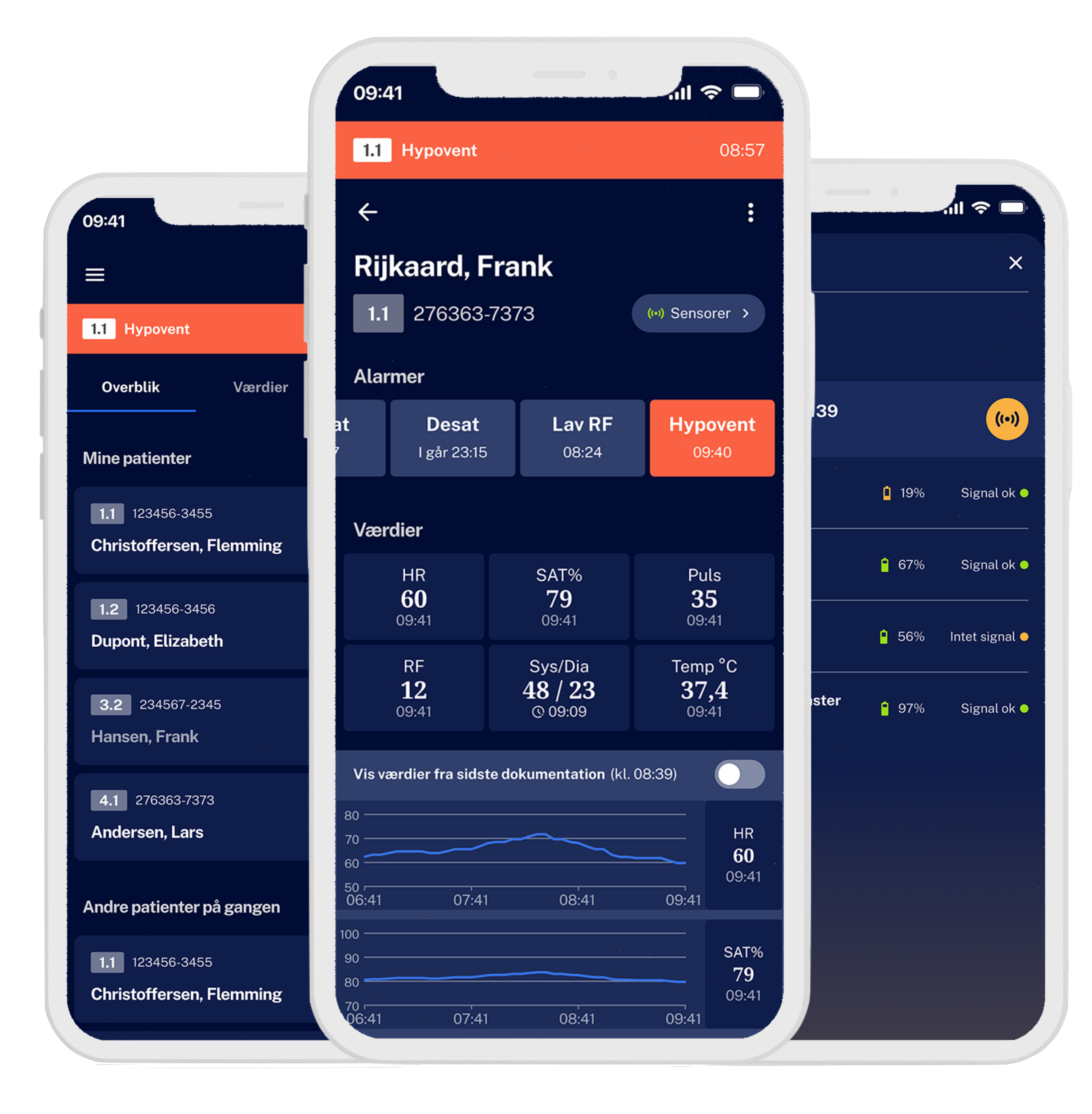
Continuous SpO2, heart rate, respiration rate, blood pressure, temperature, and heart rhythm: streamed directly from wireless wearable sensors to the nurse’s phone. No cuffs, no intermittent checks, no gaps in coverage. Ward 24/7 turns every bed in a general ward into a monitored bed, without the infrastructure cost of an ICU.
AI-Driven Smart Alerts
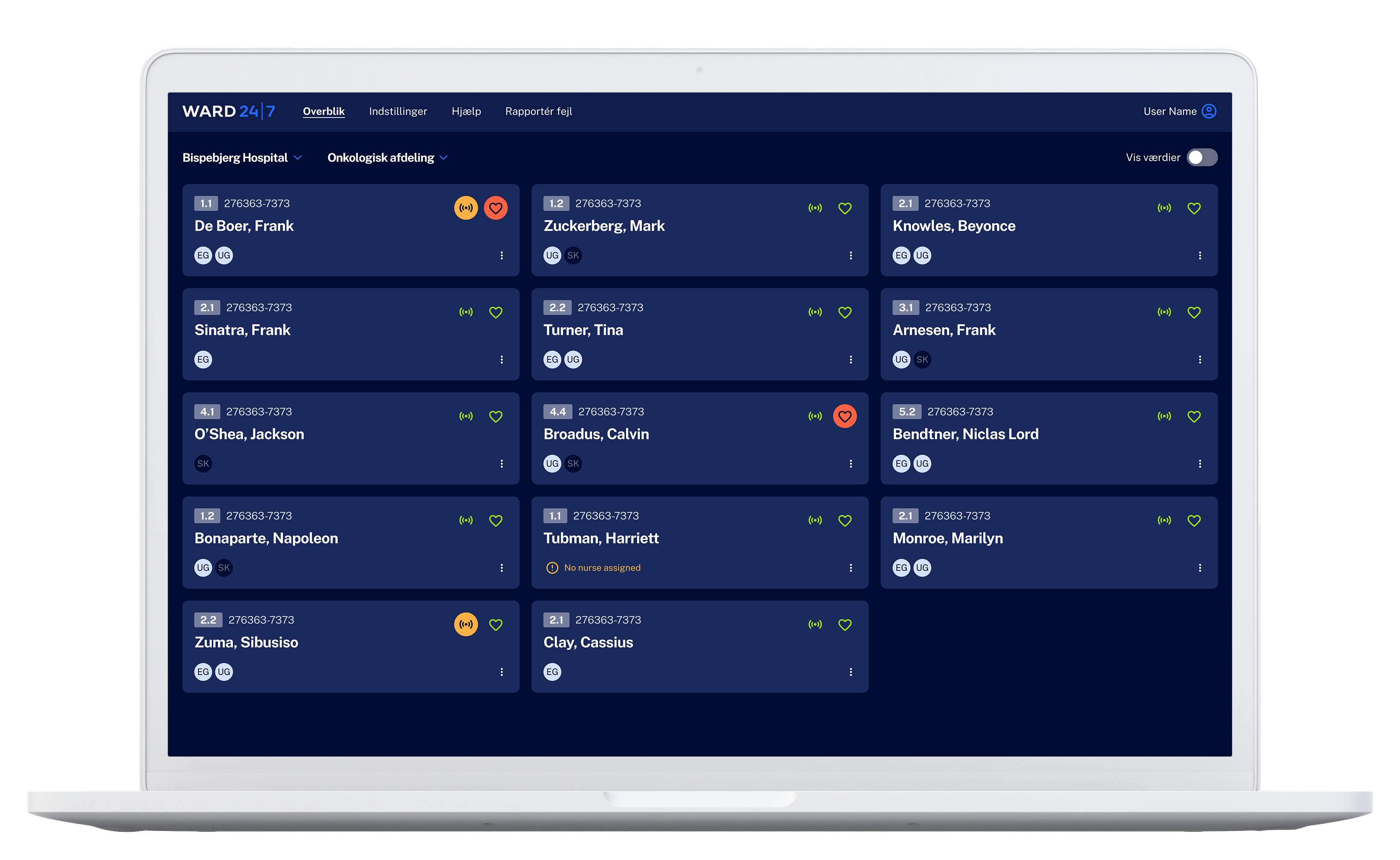
Proprietary machine learning filters the noise. Instead of flooding nurses with hundreds of low-confidence alerts per shift, Ward 24/7 surfaces only clinically relevant deterioration events: the ones that demand action. The result: a 98% reduction in false alarms and a care team that trusts every notification it receives.
EHR Integration & Bedside Charting
Nurses swipe at the bedside to document vitals directly into the hospital EHR: no manual transcription, no trip back to the nursing station. Full SSO with hospital identity systems means the app works with existing credentials from day one, and audit trails are preserved for regulatory compliance.
CE & FDA Regulatory Compliance
Ward 24/7 is CE marked under EU MDR and cleared under FDA 510(k), one of the most rigorous software-as-a-medical-device pathways in the world. Every architecture decision, data handling protocol, and alert logic was designed with regulatory submission in mind from the first sprint.
Clinical outcomes that move the needle
Results
Reduction in false alarms: nurses trust every alert they receive, eliminating the alert fatigue that causes real events to be ignored.
Reduction in postoperative complications across 10+ hospital departments in the clinical trial cohort.
Shorter average hospital stay: patients go home in 4 days instead of 5, freeing beds and reducing system-wide costs.
High-risk patients monitored across clinical trials in multiple European countries before commercial deployment.
“They communicate clearly about the status. They very quickly understand what to do and deliver as promised.”

Jelle Reichert, CTO, Ward 24/7 · Clutch Review